|
History of Fellworth House
FWH is a 2 story over 130 yr old Victorian Italianate style Historic house with a total floor area of 620sq m. While its grounds of mainly highly developed formalized garden can still boast an impressive 7445 sq m, they are now considerably smaller than the large acreage they once covered, which over the years, has been subdivided off to help accommodate Nelson City’s population growth. In both WWI and WWII its wide ranging grounds were utilized as community gardens for the production of vegetables and livestock, while also serving as a community focal point during the tough times.
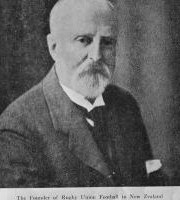
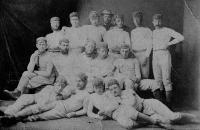
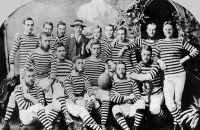
The house itself named after an old English family residence is centrally located on a sunny north facing hillside overlooking the city, harbor, and distant mountains. Its south western end also overlooks the Botanic playing field where the first ever game of rugby was played in New Zealand sometime 150 yrs ago. It is constructed entirely out of the New Zealand Native podocarp timbers Rimu, Totara, Matai and Kauri. Notable exclusions, among others, include the imported English slate tile roof and African back basalt steps at the main entrance. The latest restorations have included many fine French and English, as well as local, furnishings and fittings, both antique and made to order. The builder architect of FWH, John Scotland, also designed and built Melrose House. Little is kept in the public records of John Scotland except that he was originally sent to NZ as a ‘waif’ or orphan child sometime in the mid 19th century.
The building itself was commissioned by local public service leader and successful business man John Sharp as a private residence for him and his family in 1876 for a grand total of three thousand pounds. John sharp arrived in Nelson in 1843 to begin a distinguished career in the public service. Notable positions he held included the Registrar of Nelson’s Supreme Court at the time of the Maungatapu murders. He also served as the provincial treasurer for Nelson Marlborough before going onto become the Resident Magistrate from 1868 – 18 71, a position which also saw him become Nelson’s Chief Surveyor. John Sharp was also a Freemason.
In 1872 he entered into a business partnership with J.A. and T.H. Harley as co – owners of Kent Breweries. In 1876 he took the controlling share of Nelson largest brewery, changed its name to The City Brewery, before selling it on to Harley and Little. His second business interest was Sharp and Sons Auctioneer firm.
In 1888 he became Nelson Mayor for 3 years before entering the Nations Government as an MP. As well as being an early member of Southern Star Lodge Freemasons, he also served as a volunteer firefighter, was a member of Nelson Volunteer Rifles, was a member of the Nelson Bowling Club, and had the reputation as an excellent cricketer.
In 1919, at the age 91, John Sharp died and the house was sold to The Cawthron Trust Board. This Trust was set up by local business man and philanthropist Thomas Cawthron, who, upon his death in 1915, allocated two hundred and thirty one thousand pounds from his estate to the trust for the establishment of an Industrial School, a Technical Institute, and museum, dedicated to the improvement of NZ Agriculture, with a primary focus on the Nelson region. During the period from 1920 – 1970 the house was transformed into a series of labs, a library, and a museum, eventually becoming known as The Cawthron Institute.
In 1970 the Cawthron Institute moved to new premises and sold FWH to Brian and Lynette Samuels for fifty five thousand pounds. The new owners ran a catering and function facility out of the house up until 1991 when they sold the house to a backpacker business which operated for 8 years. In 1999 it was sold again to Dave Harvey and Rachael Yeates. Originally earmarked as a boutique hotel, Dave and Rachael began an ambitious restoration project on the house, during which time Rachael returned to England before Dave met and, in the grand premises itself, married his new wife Jill. The new owners continued the Bed & Breakfast business for one season before closing to focus on the restoration. In 2006, after completing the successful 7 year restoration project, an achievement which saw the house gain A grade status with the New Zealand Historic Houses Trust along with a feature article in New Zealand House and Garden magazine (July 2007), the Harvey’s put the house on the market, with a rating value of one million, nine hundred thousand dollars.
In 2007 the house was bought by local current owner Dentist Aleksandra Mark, who is presently running her dentistry business out of the house, along with a function center, accommodation and professional supervision services.
There have been many dignitaries to visit FWH over the years, but perhaps the most notable was HRH Prince Philip in 1954.
|